✓
Entryway buildup
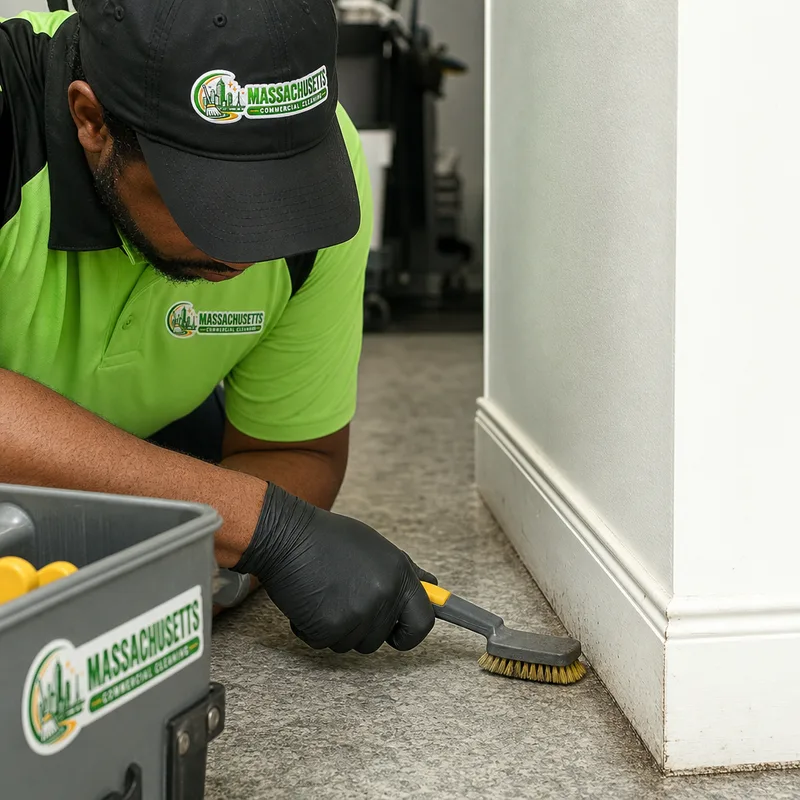
Entry floors collect moisture, grit, and debris before the rest of the building does. Targeted routine care keeps that material from spreading across interior surfaces.
Serving Boston, Massachusetts & surrounding areas
Mon–Fri 8am–6pm · Sat 9am–2pm

Floors carry the visible effects of traffic, weather, spills, and daily use. We plan commercial floor care around the material underfoot, the condition it is in, and the result your facility needs.
A floor can look worn long before it needs to be replaced. Dirt at entries, scuffing in corridors, residue in break areas, and uneven attention to edges all change the appearance of a commercial space. Massachusetts Commercial Cleaning evaluates the floor type and how people use it before defining the work.
Some spaces need routine attention to preserve a presentable baseline, while others need a one-time reset to deal with visible buildup or neglected perimeter detail. The scope distinguishes between maintenance tasks and project work so the plan matches the condition instead of promising the same treatment everywhere.
Based in Boston, our commercial floor care services can be organized around client-facing areas, shared corridors, restrooms, entries, and workspaces. A walkthrough lets us confirm materials, access, furniture considerations, and the cleaning window that works for your building.
Entry floors collect moisture, grit, and debris before the rest of the building does. Targeted routine care keeps that material from spreading across interior surfaces.
Hallways, reception paths, and break areas receive repeated foot traffic. The plan can focus on soil removal, edge work, and the conditions that make these lanes look uneven.
Vacuuming, spot attention, and detail around accessible edges help carpeted areas look maintained between deeper floor-care projects.
Restroom floors need attention around fixtures, partitions, corners, and grout or seams where moisture and residue collect over time.
Food and drink activity can leave marks and residue that basic mopping does not fully address. The scope identifies how those shared areas are maintained.
Doorways and changes between floor materials can hold debris. Cleaning those points carefully helps the entire facility read as more consistently maintained.
Most offices want a core routine that keeps the space presentable daily, plus deeper tasks scheduled weekly or monthly. Your scope can be built around your suite size, the number of restrooms, and how heavily kitchens and conference rooms are used.
Common items in a Boston office cleaning scope include:
For multi-tenant buildings around 263 Summer St and similar commercial corridors, we also plan for practical constraints like where waste can be staged, what entrances are allowed after hours, and how deliveries and access are handled by property management.
We turn your workspace priorities, operating hours, and building requirements into a documented cleaning routine.
We review floor materials, traffic patterns, visible soil, edges, and the rooms that need the most attention so the proposed work reflects actual conditions.
Your team tells us whether appearance, an upcoming reset, ongoing maintenance, or specific problem areas are driving the request. That sets the project focus.
Before service is scheduled, the written plan identifies spaces, surface tasks, access arrangements, and the work window so expectations are shared.
Work follows the agreed plan, with the finished areas reviewed against the stated priorities. Recurring maintenance can be discussed if it supports the condition you want to maintain.
For recurring commercial cleaning, Boston pricing is often about $0.12 to $0.35 per square foot, with small offices around $300 to $900 per month and larger facilities around $1,500 to $6,000+ per month. That recurring range is useful context, but it does not price a floor-care project.
Floor care is quoted per project following a walkthrough. Material type, floor condition, accessible square footage, furniture, soil level, scheduling, and the precise treatment needed all affect the scope and final cost.
A scope can address the hard floors, carpeted areas, entrances, restrooms, corridors, and shared spaces in your facility. Floor materials and conditions are identified at the walkthrough, then the cleaning approach is defined around those surfaces rather than assuming every floor needs the same treatment.
Routine janitorial work maintains a basic floor condition through tasks such as vacuuming and mopping. Floor care can be a more focused project when traffic lanes, buildup, edges, or surface appearance need additional attention. The written scope makes the difference clear before the work is scheduled.
Floor type and any facility requirements are reviewed before the scope is set. That information guides the cleaning method and helps avoid treating a finish-sensitive surface as if it were a generic hard floor. Your team can also identify approved products or surface instructions during the walkthrough.
The timing is planned around the access window your building allows and the rooms that need to remain available during the day. We discuss entry procedures, furniture considerations, and the sequence of work so the service can fit the way your facility operates.
The work depends on surface material, condition, room access, furniture, the areas included, and the treatment the floor needs. Those variables are not the same as recurring office-cleaning service, so pricing is confirmed per project after the walkthrough and written scope.
Frequency depends on foot traffic, the floor material, entry conditions, and how quickly visible wear returns. A walkthrough can separate the routine tasks that keep floors maintained from the periodic work that addresses buildup, edges, and high-use areas.
Share the floor types in your facility, the areas that are showing wear, and the timing your building allows. The site review will define the project scope and confirm pricing after the space is assessed.
Request a quote
Send the details and we will follow up to arrange a walkthrough and a written scope.